Sex in the Media

Sexualization is Occurring

Sexualization and Sexual Socialization

Sexualization occurs when any of the following conditions have taken place, self-worth is determined by one’s sexual appearance or behavior, a person is held to a standard in which physical attractiveness is equated with being sexy, rather than being viewed as a sentient being, a person is made into a “thing” for the sexual use of others, that is he or she is sexually objectified; and sexuality is inappropriately imposed on someone (Kirsh, 2010, p.175). Sexualization occurs on a continuum, with sexual evaluation at one end and sexual exploitation at the other. Sexualization places the physical and mental health of youth in jeopardy (Kirsh, 2010, p.176).

Sexual Socialization refers to the process by which children and adolescents acquire knowledge, attitudes, and values about sexuality. In this concept is the biology of sex and reproduction, the different types of sexual acts and attitudes toward the appropriateness of various sexual activities at different ages and at different stages of a relationship. Agents of sexualization include parents, siblings, peers, religious settings, health care professionals, and school (Kirsh, et al 2010).

Sexual Media

The media is filled with sexual content. Sexual content is advertised in magazines, such as playboy and playgirl, television, with porn, radio with music, lyrics that express sexual acts, and internet where you may see thousands of images of whatever sex you’re looking for (Kirsh, 2010, p.178).

The content that is observed by children and adolescents are in advertisements that shows sex appeal of men and women. The men and women can be partially nude or having some part of the body showing. 52% of advertisement that is presented shows women as sex objects.

Effects of Viewing Sexual Media on Children and Teens

Research on the effects of a sexual media diet of youth focused on three main outcomes related to sexuality: attributes, expectations, and behaviors. Adolescents that may have watched x-rated movies report a greater dislike toward condom use compared to other youth (Kirsh,2010, p.187). Expectations occur when adolescents may want to become sexually active if they believe “everyone is doing it.” Heavy viewing of sexual content during adolescence have been positively associated with increases in the onset of intercourse and the amount and type of noncoital sexual activity (Kirsh, 2010, p.188).

Medias Portrayal of Sexuality Opposed to Biblical Views

The media portrays sexuality as something good. Sexuality sells in the media. Adolescents can be vulnerable to the sexual content exposed in the media. When enticed by worldly behaviors, Matthew 15:19 says for out of the heart come evil thoughts, murder, adultery, sexual immorality, theft, false witness, slander.

Roman 13:13 says, let us walk properly as in the daytime, not in orgies, and drunkenness, not in sexual immorality and sensuality, not in quarreling and jealousy.

1 Corinthians 6:18 says, flee from sexual immorality. Every other sin a person commits is outside the body, but the sexually immoral person sins against his own body.

When you portray yourself as an sexual object to advertise for the media, you’re sinning against your own body. This sexual temptation is always before us in the media. Sex outside of marriage is treated as normal. In 1 Corinthians 10:8, God killed twenty-three thousand Israelites in one day for sexual sins they committed. Our body houses the Holy Spirit, therefore we should not sin against it. We should not defile and degrade our bodies. With the images shown above, our culture is providing fuel to feed the desires of lust, immorality, and sexual idolatry.

References

Here and There… (n.d.).Retrieved from https://passengerhawn.wordpress.com

Kirsh, S. J. (2010). Media and Youth: A Developmental Perspective. Hoboken, NJ: John Wiley & Sons

The Village Church. (n.d.) TVC: Retrieved from https://www.tvcresources.net/resources-library/articles/sexual-immorality-in-the-scriptures

DONALD DUCK SMOKING

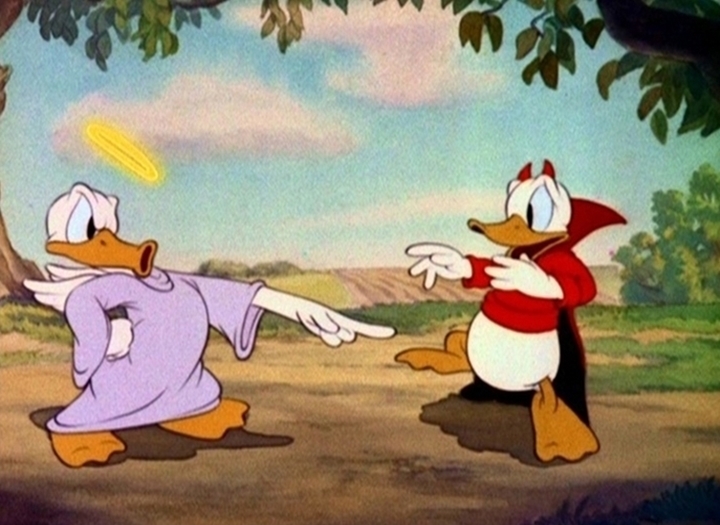
Donald’s Bad Conscience vs His Good Conscience

Should this cartoon have been banned?

The idea of smoking, I don’t think should have been promoted in a children’s cartoon. There was moral behind the situation, so I don’t think it should have been banned.

The Moral

I watched the entire video. It was called Donald’s Better Self and showed in 1938. Donald is tempted by his anti-conscience. His anti-conscience persuades Donald to skip school, go fishing, and smoke the pipe. Donald’s good conscience gets him out of bed to go to school.

Donald is being provided with the skill of dealing with his own emotions and manage his moods. Smoking the pipe was an unfamiliar situation for Donald and he had an adverse reaction to smoking the pipe. Donald was given the opportunity to learn how to handle a difficult situation.

Biblical Principles

I found three biblical principles that could have been learned from this situation. The principles were being tempted, making wise decisions, and being obedient.

First, Donald was being tempted in this situation. He should have submitted himself therefore to God, resisted the devil, and the devil duck would have fled from him (James 4:7, NIV). Also, if Donald had been able to put on the full armor of God, he may have been able to stand against the devil and his schemes (Ephesians 6:11, NIV).

Second, Donald did not make a wise decision when he decided to smoke. He should have questioned himself about the biblical principles that would inform his decision. Proverbs 2:6, NIV, says “For the Lord gives wisdom, from his mouth comes knowledge and understanding. Donald should have made sure his actions brought glory to God. Donald faced pressure while making a premature decision. He didn’t consider the outcomes of his action (“10 Biblical principles,” n.d.).

Last, Donald did disobey. He was suppose to be at school but instead went somewhere else. It would have been wise if Donald was obedient. In Deuteronomy 11:26-28, NIV, it says, “Obey and you will be blessed. Disobey and you will be cursed.” In the new testament we learn through the examples of Jesus Christ that believers are called to a life of obedience (“Learn religions,” 2011).

These are biblical principles and teachings that Donald should have considered but he was disobedient and there was the consequence of getting sick for his behavior.

Prosocial

I don’t think this cartoon would be classified as prosocial because of the bad influence that was learned. However, there were some prosocial actions shown when his good conscience tried to get Donald to do the right thing. Donald’s behavior wasn’t appropriate or beneficial.

Final Moral

The final moral would be to stay in school, be obedient, and don’t do drugs.

References

Fairchild, M. (2011, December 15). 8 Biblical Reasons Why Obedience to God Is Important. Retrieved from https://www.learnreligions.com/obedience-to-God-701962

10 Biblical Principles For Making Wise Decisions. (n.d.).Retrieved from http://www.watermark.org/blog/decision-making-prnciples

Version, B.E., & Staff, I. B. (2009). Holy Bible

Teens and Social Media

My Personal Views of Social Media and Teens

Before reading the article and watching the video, I felt that social media can be negative for teens in some ways. Cyber bullying is one of my biggest concerns, because in the media we’re seeing more of this happening through social media outlets. Another thing that makes me feel uptight about social media is sexual predators. Teens love to take selfies and post them. You never know what pervert or sex trader is on the prowl. I would just recommend cautiousness to teens as their posting, and recommend that they shouldn’t friend everyone on these social outlets. Teens should be able to make friends in the real world and not just social media. They need to be able to relate to people in person.

Teenagers and Social Media

Teenagers have different views of social media as well. The majority see social media as a way to build confidence within themselves by sharing selfies. Boys and girls both compete for attention. Some teens may feel pressure if they don’t measure up to the looks and likes of other teens. Teenagers are able to develop awareness of things going on around them in society and the world. For sheltered children, the media may be a good outlet for for them to learn things about the world. Teenagers can gain many friends and social support from the media. By interacting with other teenagers, literacy skills, reading and writing are all increased. Media can inspire in positive ways to be like someone we admire. Teenagers keep their fine motor skill and coordination shaped up by using social media and video games. Some teenagers may not be able to distinguish between fantasy and reality through video games. Sex presented in the media can confuse teenagers. They may be taught one way at home, then the media shows and tells them something different. Too much social media can cause low scores in school and obesity.

How Parents Should View Social Media and Their Teen

I believe parents should be aware of the risks and benefits that social media has on their teens. Parents should be able to communicate about social media with their teen. They should have strategies that will help their teen be responsible while using social media. As long as parents have limits and strategies to keep their teen safe while using social media, I think the use of social media would be beneficial to teenagers.

Reference

Three Things That All Social Networks Have in Common. (n.d.). Retrieved from https://www.business2community.com/social-media/three-things-that-all-social-networks-have-in-common-0566559

MUSIC AND EDUCATIONAL ACHIEVEMENT

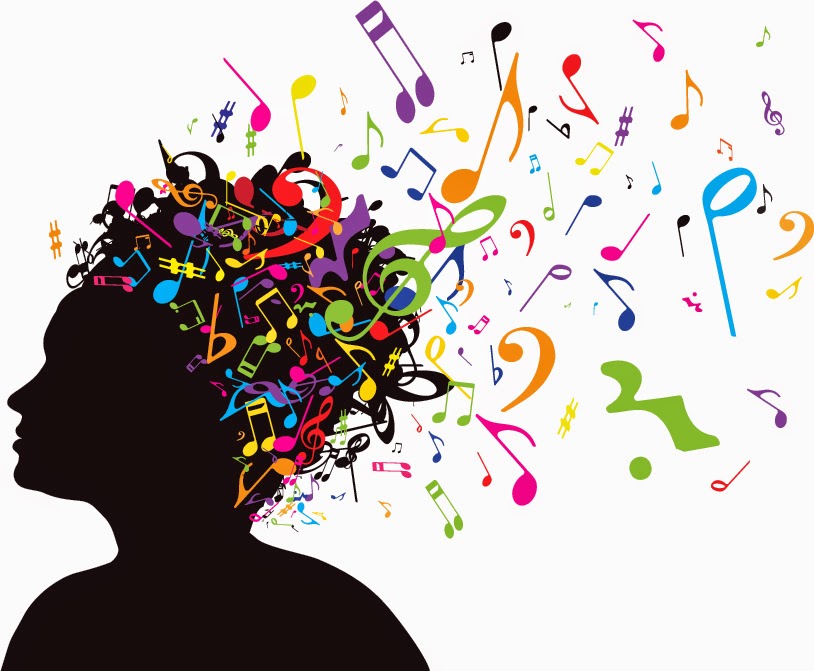
There are many important benefits of music and educational achievement. Musical training can help students develop language and reasoning. Students who have early musical training will develop in areas of the train related to language and reasoning. The left side of the brain is better developed with music, and songs can help imprint information on young minds. The skill of memorization of sheet music can help students in education and beyond (“20 Important Benefits,” 2018). When students learn music, it can help promote craftsmanship. Students are motivated to create good work. Practicing with musical instruments can improve students hand-eye coordination. Children motor skills increases while playing instruments. Music can help students stay engaged in school and give them a sense of achievement when meeting their goals in music. Music gives students better self-confidence. They can build pride and confidence through their achievements. Children are involved in taking risks while performing musical pieces. These risks help children deal with fear and anxiety. Spatial intelligence is another benefit of music. This benefit helps with advanced mathematics. Children can think creatively, which helps them problem solving (“20 Important Benefits,” 2018).

Research has noted that in 2012, on the SAT, students who participated in music scored an average of 31 points above average in reading, 23 points above average in math, and 31 points above average in writing (“Music Education,” n.d.). Students in high quality school music programs score higher on standardized tests compared to students in schools with deficient music education programs, regardless of the socioeconomic level of the school or school district (“Music Education,” n.d.). Research has also noted that grade point averages are increased when students are involved in school arts.

Teachers can promote learning and skills acquisition by offering musical activities in their curriculum and lesson planning. Teachers who give students the opportunity to develop as artists help them to achieve at higher academic levels.

References

Music Education and Academic Achievement. (n.d.). Retrieved from https://nafme.org/advocacy/what-to-know-/music-education-and-academic-achievement/

20 Important Benefits of Music In Our Schools. (2018, April 25). Retrieved from https://nafme.org/20-important-benefits-of-music-in-our-schools/

Medicaldaily.com (photo)